Case study · 2025 · Ongoing
Hanzi Tree
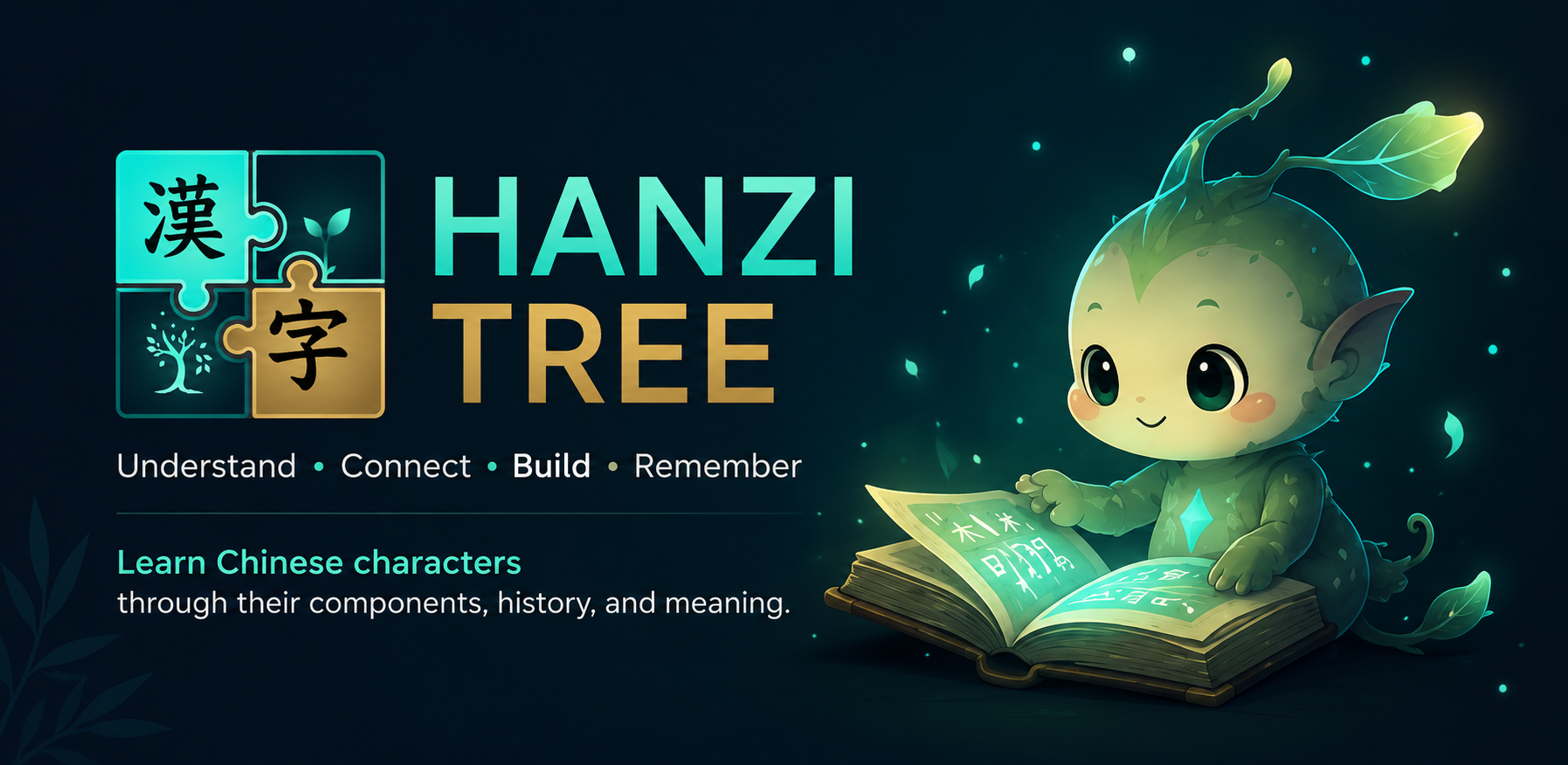
An interactive learning product that teaches Chinese characters as structured parts — assemble, recognize, and build intuition for how characters are written.

Platforms
- iOSTesting
- macOSTesting
- AndroidTesting
- WindowsTesting
- WebPlanned
Context
Learners often memorize whole glyphs without seeing the structure underneath — and then struggle when a new character appears. Decomposition is the same skill native readers use to make sense of unfamiliar writing.
Hanzi Tree treats characters as structured parts. Learners follow a skill tree of short puzzles that either assemble a character from IDS components or recognize pictographs and radicals, keeping composition and recognition as clear, distinct modes.
Role & scope
Product concept through software implementation in Flutter: skill tree, puzzle modes, progress persistence, hints, tutorial flow, and a growing library of course content aligned with how characters are built. Bundled audio covers each of the 900+ words with male and female Chinese voices.
Approach
The curriculum moves from early pictographs and radicals toward real vocabulary, with gated practice and competency and mastery rings. Content stays in versioned course data; modes keep assembly and recognition focused. Store publishing is still ahead; web access is planned once user accounts are in place.
In the app

Assemble a character from parts 
Decomposition and mnemonic 
Character progress and mastery
Authoring tools
For classroom and curriculum work, companion editors let teachers and others add custom glyphs and explanations to the Hanzi Tree database without hand-editing course files. They run on Windows today, with web authoring planned later. They are separate from the basic learner app.
The Etymology editor keeps meanings, IDS components, and teaching notes in one place. The Layout editor lets you tune how those parts sit in puzzle slots — including an SVG round-trip for precise vector work — then preview how a character will play in-game.

Etymology editor — meanings, components, and teaching notes 
Layout editor — slot geometry for puzzle assembly
Outcome
A working Flutter app with foundations through early IDS and radical drills, local progress, and tutorial support. More course material exists than is wired into the tree; the product is iterating toward a shippable learner loop across the platforms under test, with classroom authoring as a separate track.
Discuss a similar project
If you are building something in a related space, get in touch.